Proposal Review
Should Freelancers Use AI For Proposals?
A practical guide for freelancers on using AI to draft, edit and review client proposals without losing specificity, trust or personal judgement.
- Written by
- Contexora Editorial Team
- Reviewed by
- Contexora Editorial Team
- Reading time
- 13 min read
- Published
- Last updated
Short answer: yes, but not for the parts that win the job
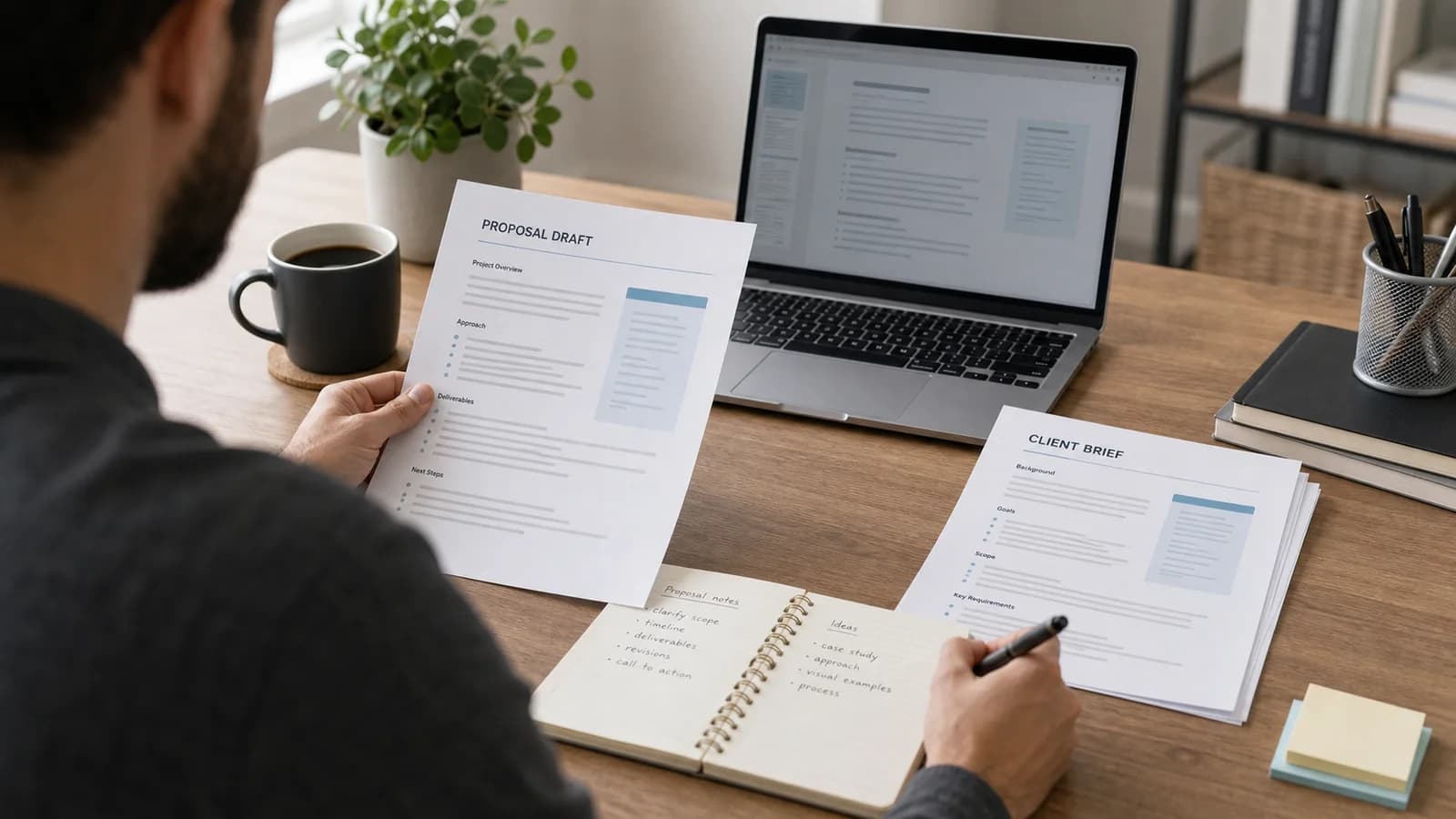
Freelancers can use AI when writing proposals, but it works best as an assistant, not as the person making the pitch. It can help you sort notes, tighten a rough draft, remove awkward wording and check whether your proposal is clear. It should not decide your strategy, invent your experience or replace the part where you show that you understand the client. Clients usually hire because they feel understood. They want to know that you read the brief, noticed the real problem and can explain how you would approach it. A proposal that sounds polished but could fit any project often loses to a shorter proposal that names the client's situation clearly. That is the central tradeoff. AI can make proposal writing faster. It can also make your proposal sound like everyone else's if you let it do too much. The safest way to use AI is simple: bring your own thinking first. Write down what the client wants, what you noticed, what you would do next and why you are a sensible choice. Then use AI to improve structure or clarity. Before sending, read the proposal like a client would. Does it sound specific? Does it answer the brief? Does it sound like you?
Why freelancers use AI for proposals
Most freelancers are not using AI because they want to trick clients. They use it because proposal writing is repetitive, time-sensitive and often unpaid. If you send proposals often, you know the routine. Read the brief. Work out whether the client is serious. Decide what to mention. Explain your approach. Keep it short. Avoid sounding desperate. Do all of that while managing current client work. AI can reduce some of that friction. It can turn messy notes into a first outline. It can help you shorten a long draft. It can suggest a clearer order. It can catch repeated phrases. It can help non-native English speakers make wording smoother without changing the substance. It is also useful when you are tired. A proposal written at the end of a long day can be too blunt, too long or too vague. Asking a tool to help organise your thoughts can save time. The problem starts when the tool writes the pitch without enough input from you. If your prompt is vague, the output will usually be vague. If you ask for a full proposal from a short job post, you may get something that sounds complete but says very little. That is the kind of proposal clients skip.
Where AI can genuinely help
AI is useful for low-risk parts of proposal writing. It can help you organise, edit and check. Those jobs matter, but they are different from deciding what to say. For example, you can paste your own rough notes and ask for a clearer outline. You can ask whether the proposal answers the client's stated requirements. You can ask for a shorter version that keeps the same meaning. You can ask it to point out sentences that sound generic. AI can also help you prepare variants for different platforms. A marketplace proposal may need to be short. An email proposal may need a warmer opening. A formal agency proposal may need sections such as scope, timeline and assumptions. Another good use is editing for tone. If you tend to oversell, ask for a calmer version. If your draft is too casual, ask for a more professional version. If you are writing in a second language, ask for grammar help while keeping your meaning unchanged. The rule is to keep control of the facts. Your experience, examples, process, availability, pricing assumptions and client understanding should come from you. AI can shape those materials. It should not create them from thin air.
Where AI makes proposals weaker
AI often weakens proposals when it fills gaps with safe-sounding language. That language can look fine at first. It may even sound polished. But clients are not only checking grammar. They are checking whether you understand the work. A weak AI-assisted proposal often opens with a broad compliment, repeats the client's words without adding insight and promises a professional result without explaining how. It may mention communication, quality and timely delivery because those phrases fit almost any job. The risk is not that every client will say, this was written by AI. The risk is that the proposal feels interchangeable. It does not give the client a reason to choose you. AI can also invent confidence. It may suggest a timeline, method or result that you did not intend. It may make your experience sound bigger than it is. It may smooth away useful uncertainty, such as a question you need answered before pricing the job. For freelancers, that can create trouble later. Winning the wrong project with an overconfident proposal is not a win. It can lead to scope problems, missed expectations and awkward client conversations.
What clients actually notice
Clients do not all read proposals the same way, but many notice the same basics. They notice whether you read the brief. If they asked for a Shopify migration and your proposal talks generally about websites, that is a problem. If they mentioned slow checkout performance and you explain how you would inspect the checkout flow, that feels different. They notice whether you understand the business goal. A client may not care about your favourite tools. They care about fewer support tickets, more qualified leads, cleaner reporting or a launch that does not slip. They notice whether your examples fit. A portfolio link is stronger when you explain why it relates to their project. A long list of skills is weaker than one relevant example. They notice clarity. A good proposal tells them what you would do next, what you need from them and what the first step would look like. They may also notice generic phrasing, especially if they receive many proposals. They may not call it AI. They may simply feel that the proposal was not written for them.
Generic proposals vs personalised proposals
A generic proposal talks about you in broad terms. A personalised proposal talks about the client's problem with enough detail to show that you paid attention. Generic: I have extensive experience creating high-quality websites and can deliver a professional solution for your business. Better: Your brief mentions that customers drop off during checkout. I would start by reviewing the checkout steps, analytics events and any support tickets tied to payment or shipping confusion. Then I would separate quick fixes from changes that need design or development time. The second version is not longer because it is trying to impress. It is stronger because it gives the client a picture of how you think. Personalisation does not mean writing a custom essay for every lead. It means adding the details that matter. Name the problem. Mention one relevant constraint. Ask one useful question. Connect one piece of your experience to the project. AI can help you polish that. It cannot know which detail matters unless you provide it. If you feed it only the job post, it will usually give you a job-post-shaped answer. If you feed it your actual thinking, it can help you present that thinking more clearly.
How AI can hurt response rates
A proposal does not have to be detected as AI-written to perform badly. It only has to feel low-effort. Clients often skim. If the first few lines sound like a template, they may move on before they reach your best point. This is especially true on freelance marketplaces where clients receive many replies in a short time. AI can hurt response rates when it makes openings too long. It can also bury the useful part under polite filler. A client wants to know: did you understand the project, can you help, and what should happen next? Another issue is sameness. If many freelancers use similar prompts, the proposals start to share the same rhythm. The phrases may be grammatically correct but forgettable. There is also a trust issue. If your proposal sounds more polished than your later messages, the client may feel a mismatch. That does not prove anything, but it can make the relationship start awkwardly. A better approach is to use AI after you have written the real pitch. Ask it to make the proposal shorter, clearer or less repetitive. Do not ask it to replace your judgement.
How to use AI without sounding robotic
Start with notes, not a blank prompt. Write five things before opening the tool: what the client needs, what problem you noticed, what you would do first, what relevant experience you have and what question you need answered. Then ask AI to organise those notes. Keep the facts. Remove anything it invents. If a sentence sounds like something you would never say to a client, rewrite it. Use shorter prompts. For example: Make this proposal clearer without adding claims. Or: Point out any sentences that sound generic. Or: Shorten this to 180 words and keep the client-specific details. Keep one or two human details in the final version. That might be a specific observation from the brief, a practical question, or a short example from a similar project. Read the proposal aloud before sending. If it sounds like a brochure, cut it. If it sounds like a real professional explaining how they would help, you are closer. The goal is not to hide AI use. The goal is to send a proposal that is accurate, specific and useful.
Practical proposal scenarios
Scenario one: a client asks for a website redesign. A weak AI proposal says you can create a modern, responsive site that improves user experience. A stronger proposal says you would first review the current site structure, analytics and conversion points, then identify which pages need design changes and which need clearer content. Scenario two: a client needs email copy. A weak proposal says you can write engaging emails that drive results. A stronger proposal asks what list segment the email is for, what the offer is, what previous emails performed well and whether the goal is reply, click or purchase. Scenario three: a client wants help with a resume or profile. A weak proposal says you can optimise the document for success. A stronger proposal explains that you would clarify the target role, remove vague achievement language and make sure the final wording still sounds like the client. In each case, AI can help polish the proposal. It can make the structure cleaner. But the useful part comes from your diagnosis. If you do not have enough information, say so. A good proposal can include a question. Clients often appreciate someone who notices uncertainty instead of pretending everything is obvious.
Ethical considerations for freelancers
Using AI to write proposals is not automatically unethical. Freelancers have always used templates, swipe files, editors and writing tools. The ethical issue is whether the proposal is honest. Do not let AI invent case studies, credentials, timelines or client results. Do not claim experience you do not have. Do not imply that you have reviewed materials you have not read. Be careful with client information. Do not paste private briefs, login details, customer data or confidential documents into tools unless you understand how that data is handled and have permission to use it that way. Think about client expectations. Some clients will not care if you use AI to edit. Others may care if the proposal was mostly generated. If a platform or client gives rules about AI use, follow them. There is also a practical ethical point: your proposal sets expectations. If AI makes you sound more senior, faster or more certain than you really are, the project may start on a false footing. That is bad for the client and bad for your business.
How to review a proposal before sending
Before sending, check the proposal in three passes. First, check relevance. Does the first paragraph mention the actual project? Does the proposal answer the brief? Did you include one detail that could only come from reading the client's request? Second, check truth. Remove claims you cannot support. Check timelines, deliverables and examples. If the proposal mentions a process, make sure it is a process you would actually use. Third, check readability. Cut filler. Shorten long openings. Replace broad claims with specific observations. Keep the next step clear. A simple final checklist helps: Does this sound like me? Can I explain every claim on a call? Is the client's problem named clearly? Is there one relevant example or question? Have I removed invented details? Is the call to action simple? If the proposal fails one of those checks, fix that issue before worrying about polish. You can also compare the proposal against the client brief line by line. If the brief asks for three things, your proposal should answer those three things. If the client mentioned a concern, your proposal should respond to that concern directly. If the client gave no budget or timeline, avoid pretending those details are settled. A useful final test is to remove your name from the proposal. Would the client still know why you, specifically, are a good fit? If not, add one concrete detail from your work, your process or your reading of the brief.
How Contexora can help review proposals
Contexora's AI Proposal Detector can help you review a proposal before you send it. It is not there to prove who wrote the text. It is there to show patterns that may make a proposal feel generic, overly polished or disconnected from the client brief. For freelancers, that can be useful because proposal quality is easy to misjudge when you are rushing. The report can point out repetitive structure, vague capability claims, generic enthusiasm and low-context filler. Those are the areas that often make proposals weaker. A sensible workflow is to write the proposal first, then run a review. Look at the explanations. If a section is flagged because it sounds generic, add a real project detail or cut the sentence. If the opening is too broad, name the client's problem sooner. If the proposal sounds too formal, bring it closer to how you would speak on a client call. Contexora cannot tell you whether a client will reply. It can help you make the proposal clearer, more specific and easier to trust before it leaves your desk.
Conclusion
Freelancers can use AI for proposals, but the useful parts still need to come from the freelancer. AI can help organise notes, tighten wording and spot generic language. It should not invent your experience, decide your strategy or replace your understanding of the client's problem. Clients respond to relevance. They want to see that you read the brief, understood the job and can explain a sensible next step. A proposal that is short, specific and honest usually beats one that is polished but vague. Use AI as an editor. Keep your own judgement in charge. Before sending, check that the proposal is true, specific and written in a voice you can stand behind. That is the best way to use the tool without letting the tool take over the pitch.
Frequently asked questions
Should freelancers use AI to write proposals?
Freelancers can use AI to organise notes, edit drafts and improve clarity. They should not rely on it to invent experience, strategy or client-specific insight.
Can clients tell if a proposal was written by AI?
Some clients may notice generic or overly polished language, but they cannot always know how a proposal was written. The bigger issue is whether the proposal feels specific and trustworthy.
Do AI-written proposals get fewer replies?
They can, especially when they sound like templates. A proposal does not need to be identified as AI-written to be ignored. It only needs to feel low-effort or unrelated to the brief.
What parts of a proposal should come from the freelancer?
The client observation, relevant experience, approach, assumptions, questions, pricing logic and next step should come from the freelancer. AI can help edit those ideas.
Is it unethical to use AI for proposals?
Not automatically. The ethical problem is dishonesty: invented credentials, fake examples, unsupported claims or misuse of confidential client information.
How can I make an AI-assisted proposal sound more natural?
Start with your own notes, keep client-specific details, remove invented claims, cut filler and read the final version aloud before sending.
Should I disclose AI use in proposals?
Follow the client or platform rules. If no rule exists, the key is that the proposal must be accurate and reflect your actual work, process and judgement.
How can Contexora help freelancers?
Contexora can review proposal text for generic phrasing, repetitive structure and low-context claims so freelancers can revise before sending.
Guidance, not proof
AI detection results are guidance only. No detector can prove authorship with certainty, and important decisions should include human review and appropriate context.
About the editorial team
Contexora Editorial Team publishes guidance focused on explainable review, privacy and the responsible interpretation of AI writing signals.
Apply the guidance carefully.
Choose the relevant tool, review the signals and keep the final decision human-led.